
By Rosemary Okoduwa
The Edo State Government has reaffirmed its commitment to strengthening child rights protection and enforcement across the state, as it convened a strategic meeting of the Edo State Child Rights Implementation Committee (CRIC).

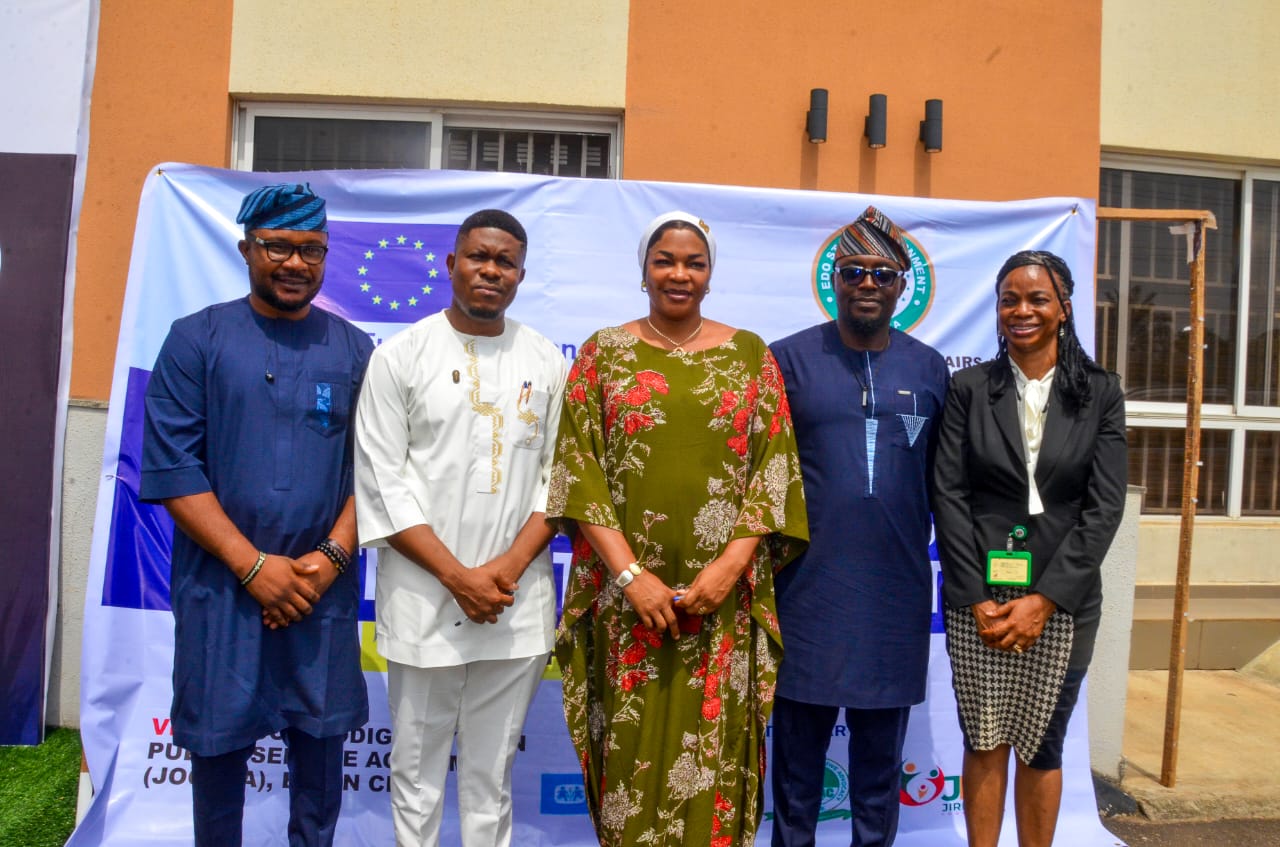
The meeting, organised by the Ministry of Women Affairs and Social Development in collaboration with SOS Children’s Villages, the Rule of Law and Anti-Corruption Programme (ROLAC), and the Civil Society Legislative Advocacy Centre (CISLAC), held at the John Odigie Oyegun Public Service Academy (JOOPSA), brought together key stakeholders to assess progress, identify gaps, and chart a stronger path forward for child protection.

Addressing participants, the Commissioner for Women Affairs and Social Development, Mrs. Eugenia Abdallah, reaffirmed the government’s resolve to fully implement child rights laws and reinforce child protection systems in Edo State. She described the gathering as a demonstration of shared responsibility anchored on the principles of the United Nations Convention on the Rights of the Child.
“Children are not passive recipients of charity,” she said. “They are holders of rights: rights to protection, participation, development and survival.”

While acknowledging notable progress, Mrs. Abdallah noted that many children in the state still face significant challenges, including poverty, inequality, abuse, neglect, child labour, trafficking, limited access to quality education and healthcare, as well as emerging digital risks.
She stressed that policies alone are not enough to safeguard children.
“Our responsibility extends beyond policy documents and formal commitments. It demands action measurable, coordinated and sustained action,” she said.
The Commissioner called for stronger preventive systems, including early intervention mechanisms, family support services and increased community awareness. She also emphasised the need for accountability in enforcing child rights laws.
“Laws must be enforced. Institutions must be transparent. Data must guide our decisions. Without accountability, rights remain words on paper,” she added.
Mrs. Abdallah further advocated for the inclusion of children in decision making processes, describing participation as transformative rather than symbolic. She underscored the importance of equity, particularly for vulnerable groups such as children with disabilities, those in rural and marginalised communities, migrant children and children in conflict with the law.
“Leaving no child behind is not a slogan; it is a standard we must uphold,” she stated.
In his presentation, the Edo State Programme Officer of the Rule of Law and Anti-Corruption Programme (ROLAC), Mr. Imonitie Omokhodion, provided updates on the implementation status of the Child Rights Law in the state. He highlighted key interventions undertaken, impacts recorded, and challenges hindering effective enforcement, while offering recommendations to strengthen collaboration and improve compliance.
Also speaking, the Project Manager of SOS Children’s Villages, Mr. Innocent Madueke, commended the state government’s commitment to advancing child welfare and pledged continued support through family-based care, early intervention and community-driven child protection initiatives.
Similarly, the Programme Manager of the Civil Society Legislative Advocacy Centre (CISLAC), Mr. Solomon Adoga, reaffirmed the organisation’s commitment to enhancing child protection systems in Edo State through advocacy, accountability and institutional collaboration. He noted that the European Union-supported project aims to strengthen enforcement of the Child Rights Law and promote coordinated stakeholder action.
The meeting concluded with an interactive question and answer session, during which participants shared practical recommendations and outlined strategic steps to deepen collaboration and enhance child protection efforts across the state.
Discover more from DE-PATRIOT
Subscribe to get the latest posts sent to your email.