
By Dr. Patrick Akhere Ebojele
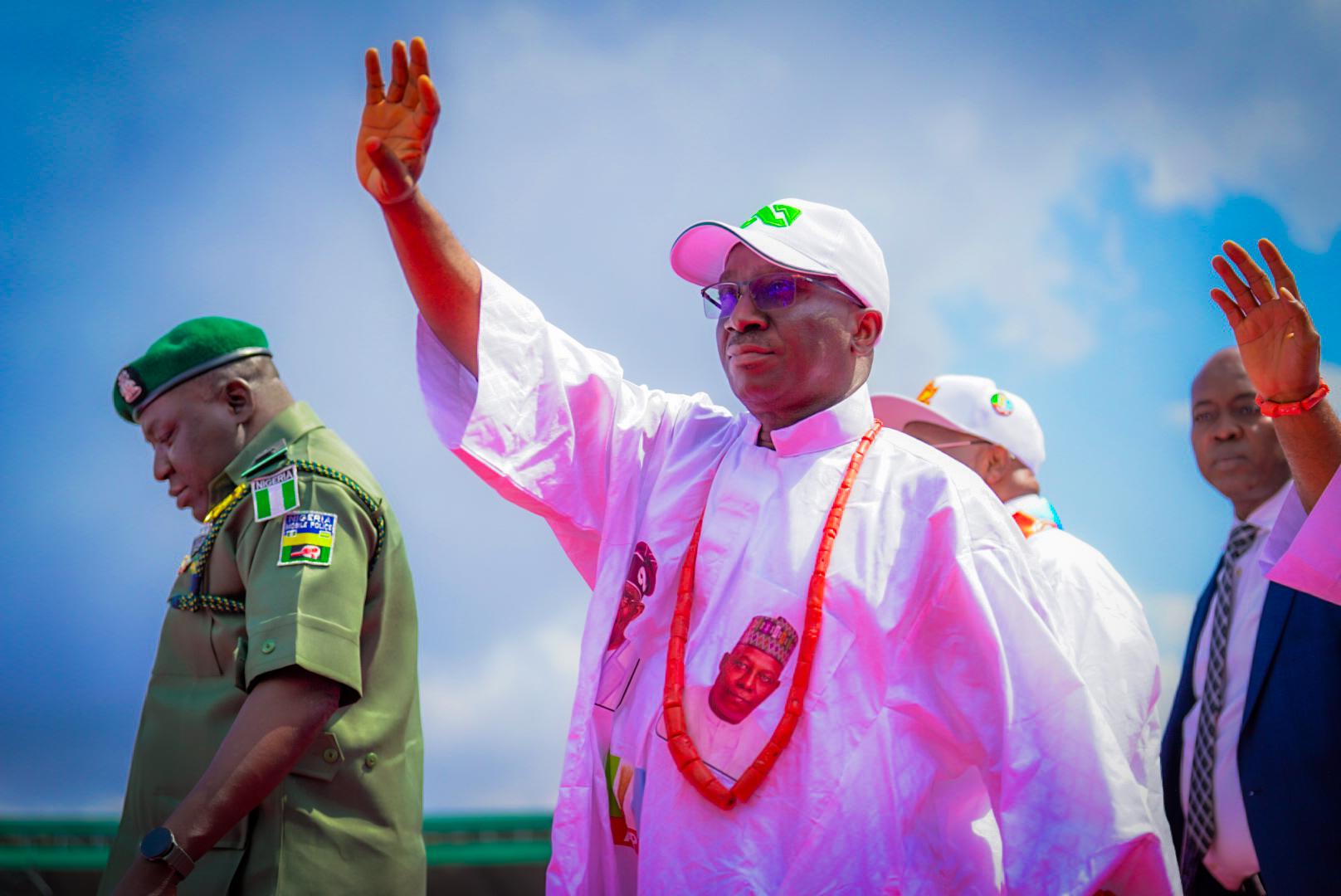
Two years ago,precisely 12th of November, 2024,Senator Monday Okpebholo took the oath as Governor of Edo State. Anyone who has followed him closely, since he took office, will know he rarely stays long in his office. He turns up at roadworks, hospital wards, school compounds, and markets, sometimes before the people in charge expect him. Some critics find this untidy. Many Edo people find it reassuring.
That habit is the best way to understand why he accepted the name “Okpe’s baby,” a name that began as he inspected some projects. The name sounds playful, and it is. It also says something about how people see him: as someone close to them, not a distant figure behind tinted glass in an air-conditioned SUV. It belongs with other street names he has collected, including “Waka Waka Governor,” which some circles gave him alongside “Akpako-messiah, “Akpakorescue”,”Akpako bulldozer” among several others.
As governor, Senator Monday Okpebholo acceptance of these names is telling the public that he is not afraid of familiarity.
Across the state today, nobody can discuss the governor fairly without starting from security. Here is a governor who inherited a state close to a war zone, with more than 300 cult-related killings recorded in 2024 alone. His response was to replace the weak anti-cultism law with a stronger one, give security agencies new Hilux vans and motorcycles, in their hundreds, and recruit 2,500 officers into the Edo State Security Corps. He went further by recruiting 1000 forest guards to make the forests safe.
Is Edo now free of crime? No, and he has never claimed so, but crime has reduced drastically. The bloodbath that cultism foisted on the dead has been reduced to a dramatic extent. He once told worshippers in Auchi that insecurity remains on his mind and that criminal elements would be driven out. That honesty matters. A state does not heal in 24 months, but the direction of travel counts.
Some of the governor’s most telling work outside security has been his healthcare agenda. He met the Anegbette General Hospital closed for 19 years and reopened it. Obayantor General Hospital was also reopened after 22 years. The Central Hospital Annex in Benin City now runs 24-hour services with an accident and emergency unit. The administration recruited 1,376 health workers, supplied equipment to all 36 secondary health facilities, and enrolled more than 600,000 residents in the Edo State Health Insurance Scheme and has builtand renovatedwell over 70 Primary healthcare centres across the threesenatorial districts.
The personal gestures fit the same pattern. In March, the governor visited Irrua Specialist Teaching Hospital and settled the bills of a burned couple from Ekpoma, whose wife had delivered a baby by caesarean section, along with those of other patients on the wards. No policy paper produces that. It comes from a man standing at a hospital bed.
Edo people have, over time, judged governments by their roads, and the governor knows it. He has said plainly that bad roads were among the things he inherited. His administration has listed the Ramat Park flyover and a second flyover at Adesuwa junction in Benin City among its flagship projects. Motorists and residents in Benin City have commended the rehabilitation of inner-city roads. Local councils also received 54 units of heavy-duty equipment, including graders, excavators, and rollers, shared among all 18 councils to rehabilitate rural communities.
Not every road is finished, and flooding still threatens communities. Only this week, he inspected projects in Benin City and pledged to tackle flooding and erosion and to complete critical road and drainage works. The work is real, and so is the unfinished part. But the governor is committed.
In the classroom, Governor Monday Okpebholo has recruited 5,000 permanent teachers and upgraded 63 schools to modern standards. At the reopening of the renovated Oredo Girls School, the governor said better staffing and infrastructure were showing results. This is one of the many schools that have been turned around.
On the farm side, the state now has farms, warehouses, and tractors for mechanized agriculture. The state farms at Udomi is a beacon, a step meant to raise standards and give young farmers a firmer footing. Agriculture sits in the SHINE Agenda for a reason: a state that feeds itself is harder to push around.
Sport has been a quiet success. Team Edo won 302 medals at the 22nd National Sports Festival in Abeokuta and finished third at the maiden Niger Delta Sports Festival in Uyo. The Sports Writers Association of Nigeria named him Distinguished Governor of the Year. Young athletes are among the people who feel the change most directly.
Employment has come through recruitment as well as support for small businesses. Beyond the teachers and health workers, the government approved N1 billion in soft loans for market women and revitalised the Uromi and Igarra skills acquisition centers, which produced over 140 graduates in 2025. When 41 Edo citizens fled xenophobic attacks in South Africa, he gave ₦1 million to each returnee. The government has also paid salaries regularly and kept the ₦75,000 minimum wage.
The 2026 budget of ₦939.85 billion, he christened the Budget of Hope and Growth, rests on the SHINE Agenda: Security, Healthcare, Infrastructure, Natural Resources and Agriculture, and Education.
“Okpe’s baby,” the alias works well with the governor because his policies agree with it. A government that reopens a hospital shut for 19 years, pays a stranger’s medical bill, inspects a flooded street in person, and loans money to market women is not governing from a distance. It meets people where they are.
Recognition has followed.New TELEGRAPH gave him an award following his tremendous interventions in education, LEADERSHIP named him Governor of the Year 2026, SILVERBIRD also named him as Governor of the Year 2026,while still counting and the SHINE Agenda has drawn praise from several quarters. Honors are pleasant, but the governor himself would say the real test is a mother in Ekpoma, a trader in Benin, or a farmer in Etsako asking whether life is better than it was two years ago.
On that question, Edo people will decide, as they should. The roads must be finished, the floods tamed, and insecurity pushed back further. Two years is a beginning. Okpe’s baby has shown he can walk the streets.
The next two years will definitely, by the grace of God, be one that will ursher in more development and progress to Edo State.
ABOUT THE AUTHOR:
Ebojele, PhD. in public administration, is Chief Press Secretary to Governor Monday Okpebholo of Edo State.
Discover more from DE-PATRIOT
Subscribe to get the latest posts sent to your email.