
By Katherine Abayomi
Stakeholders in the justice sector and civil society organisations have called for stronger collaboration and synergy among the judiciary, executive, legislature and citizens to safeguard judicial independence, protect human rights and strengthen democratic governance across West Africa.
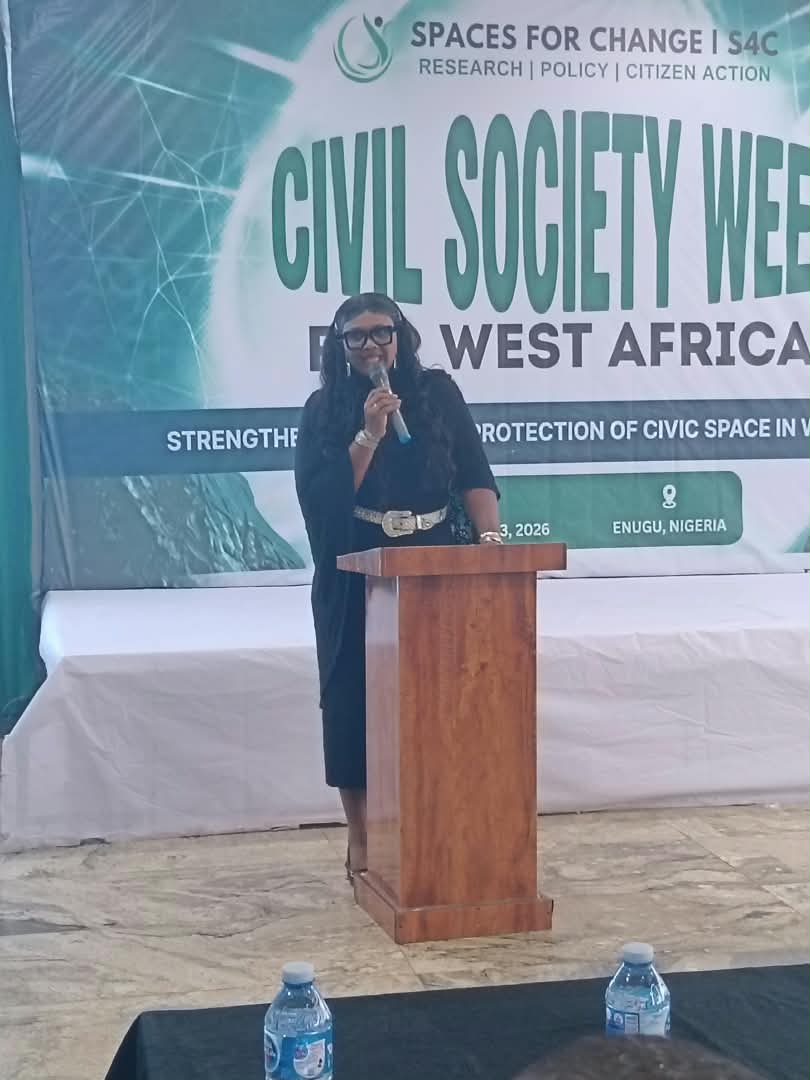
The call was made during the 4th Civil Society Week for West Africa 2026, organised by Spaces for Change (S4C) in partnership with the Ford Foundation and the West Africa Civil Society Institute (WACSI). The two-day event, held on Thursday and Friday, was themed “Strengthening Judicial Protection of Civil Space in West Africa.”
The conference provided a platform for stakeholders to examine emerging threats to civic participation, the growing pressures on judicial institutions and strategies for reinforcing judicial independence as a safeguard for human rights and democratic freedoms. Delivering the keynote address on “Strengthening Judicial Protection of Civil Space in West Africa: Balancing Human Rights, Civic Space and Security in Civil/Criminal Adjudication,” President of the Enugu State Customary Court of Appeal, Hon. Justice George Nnamani, stressed the need for harmonious relations among the three arms of government. He described the legislature, executive and judiciary as interconnected institutions whose responsibilities must complement one another for the good of the citizenry.
Justice Nnamani warned against the concentration of power in any arm of government, questioning whether any had assumed an Orwellian-style dominance. He identified the weakening of the legislature and the acquiescence of the judiciary as troubling developments threatening democratic governance. According to him, the emasculation of the judiciary is a major cause of societal instability and could ultimately trigger national collapse, warning that an impoverished judiciary breeds corruption, while corruption breeds injustice.
Also speaking, Executive Director of Spaces for Change West Africa, Victoria Ibezim-Ohaeri, highlighted what she described as the growing weaponisation of judicial processes and the use of legal mechanisms to undermine human rights. She disclosed that judicially backed human rights violations had recorded an alarming increase of nearly 70 per cent. She noted that across the West African sub-region, legal processes were increasingly being used to frustrate organised public movements, delegitimise opposition actors, justify state-led crackdowns and legitimise security policies that undermine fundamental rights.
Ibezim-Ohaeri further observed that the trend was particularly concerning in countries battling insecurity and terrorism, where increasing security-related cases were blurring the delicate boundaries between national security and fundamental human rights. She called for stronger safeguards to ensure that the justice system does not become an instrument of repression but remains a defender of democratic freedoms and the rule of law.
A retired judge of the United Nations District Tribunal, Izuwako Nkemdilim, also described the judiciary as the last hope of the common man but expressed concern that the institution itself was increasingly constrained. She noted that the responsibility of the judiciary extended beyond delivering judgments to providing oversight over other arms of government, protecting the rights of ordinary citizens and ensuring access to justice. Similarly, founding Executive Director of the African Centre for Leadership, Strategy and Development (Centre LSD), Dr. Otive Igbuzor, called for a balance that allows each arm of government to perform its constitutional responsibilities without undue interference. He identified the politicisation of the judiciary and the judicialisation of politics as major challenges, urging citizens to monitor the executive, legislature and judiciary to promote accountability and curb abuses of power.
The conference brought together judicial officers, legal practitioners, civil society leaders, election stakeholders, institutional representatives and policymakers. Participants agreed on actionable strategies to strengthen judicial independence, uphold the rule of law, improve civil society responses to emerging patterns of judicially enabled repression and promote a safer, more open civic space across West Africa as essential pathways to democratic consolidation.
Discover more from DE-PATRIOT
Subscribe to get the latest posts sent to your email.