
By Rosemary Okoduwa
The Edo State Government has validated the revised Edo State Child Protection and Safeguarding Policy, a strengthened framework designed to address emerging threats to children, including risks associated with rapid technological advancement and artificial intelligence (AI).
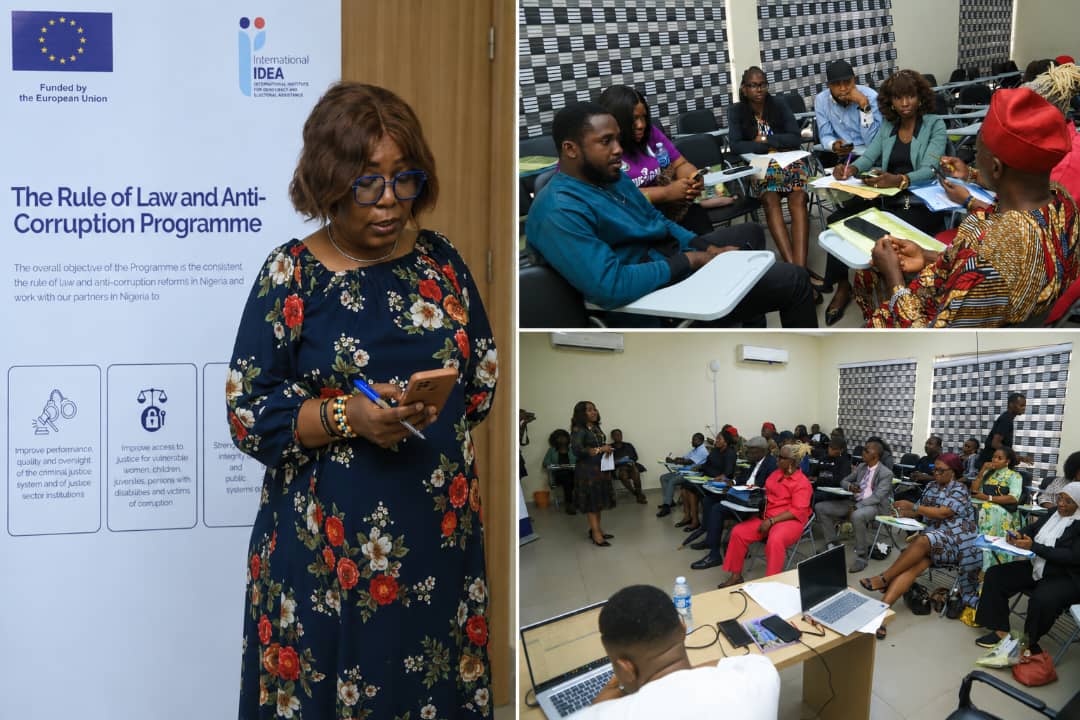
The two-day technical validation meeting, held at the John Odigie Oyegun Public Service Academy (JOOPSA), Benin City, brought together stakeholders from government ministries, development partners, civil society organisations, child protection actors, and other relevant institutions to review and adopt the revised policy.
The exercise was supported by the Rule of Law and Anti-Corruption (RoLAC) Phase II Programme, funded by the European Union and implemented by International IDEA, as part of ongoing efforts to strengthen child protection systems in Edo State.
In her welcome address, the Commissioner for Women Affairs and Social Development, Hon. Eugenia Abdallah, represented by the Ministry’s Director of Media, Daisy Osunde, reaffirmed the State Government’s commitment to safeguarding the rights, dignity, and welfare of every child. She noted that the policy review reflects the government’s resolve to ensure that child protection mechanisms remain responsive to contemporary realities, particularly the challenges posed by digital technology and artificial intelligence.
Speaking during the technical session, the Edo State Programme Officer of RoLAC and Technical Facilitator, Mr. Imonitie Omokhodion, said the review addressed gaps identified in the 2015 Child Protection Policy while aligning the framework with current realities.
He explained that the 2026 policy introduces key enhancements, particularly provisions addressing the growing influence of technology and artificial intelligence, as well as the associated risks to children.
“We have reviewed the document into a 2026 version with significant improvements over the 2015 policy, particularly in response to the rise of technology, artificial intelligence, and the increasing risks they pose to children,” he said.
Omokhodion added that the revised policy establishes minimum standards for all child-facing institutions across Edo State, ensuring uniform child protection practices in both public and private sectors.
He stressed that effective implementation requires a whole-of-society approach.
“School principals, heads of child-facing institutions, and every stakeholder have a role to play. The revised policy provides minimum standards that all child-facing institutions in Edo State must comply with,” he stated.
Participants conducted a detailed review of the draft policy and its schedules, made recommendations to strengthen the document, and reached consensus on the final amendments before formally adopting the updated policy.
The validated policy is expected to strengthen efforts to prevent abuse, exploitation, neglect, and other forms of violence against children, while promoting safer environments in homes, schools, communities, and all child-facing institutions across Edo State.
Discover more from DE-PATRIOT
Subscribe to get the latest posts sent to your email.